Culture Jacking: Jump In or Sit Down?

You've seen it. A meme explodes. A sound takes over. A cultural moment demands attention.

And somewhere in a marketing meeting, someone asks: ”Should we post an Elizabeth Holmes meme? Or something about Jimothy?” “Do we need to comment on Heated Rivalry, Taylor’s Wedding, or Lake America?”

The pressure is real. Social media moves at lightning speed, and brands feel this urgent need to participate, or risk becoming irrelevant.

Most brands get culture jacking wrong.

What Is Culture Jacking?

Culture jacking (sometimes called trendjacking) is the act of joining real-time viral conversations—memes, sounds, challenges, hashtags—and connecting them to your brand. When done well, it plugs you into an already-engaged audience and embeds your brand in conversations that matter to them. 

When done poorly, it’s the marketing equivalent of showing up to a party in the wrong costume. 

The Data Says... It's Complicated

Recent research shows social users are split almost evenly: 

0 %

of social users believe brands already do a good job  

0 %

say brands don’t publish truly original content 

0 %

say it only works if a brand reacts within 24 to 48 hours 

0 %

think it’s cool for brands to participate in trends

0 %

find it embarrassing when brands jump on trends 

And yet, 81% of consumers say social media drives them to make spontaneous purchases multiple times per year. On TikTok specifically, 81% of users say the platform introduces them to topics and trends they didn’t previously know they liked. 


The opportunity is massive. The margin for error is tight. 

Here's What Winning Looks Like

The brands that succeed treat culture jacking as strategic relevance. They align trends with existing brand positioning. They move fast, with intention. They measure success beyond views.

Snickers turned social listening into a real-time expression of its brand idea with Hungerithm, a system that measured online sentiment. By identifying moments when the internet was getting angry, from sports losses to everyday frustrations, the brand treated online irritability as evidence of “hunger,” responding with timely content

JCPenney responded to the exclusivity of Fashion Week by staging “The Other Paris Runway” in Paris, Texas. Their CMO described the strategy as finding culturally relevant moments where the brand could poke fun at elitism and translate them for their customer. The cultural moment became a way of expressing the brand’s point of view.

IKEA built infrastructure for this. Their Responsive Project Team was developed specifically to create content in response to news, trends, pop culture moments, and key calendar dates, quickly, creatively, and cost-efficiently. They institutionalized the capability rather than scrambling reactively.


Your brand may not have the time or staff to be on the lookout for social media that matches your brand, create content, and turn it around in 48 hours. But that’s what a good partner does. They know your brand, and are always on the lookout for opportunities to help increase sales and relevance. 

At Leap Group we believe in Market Less, Matter More.  Applied to culture jacking, this means: 

Don't jump on every trend. Jump on the right ones.

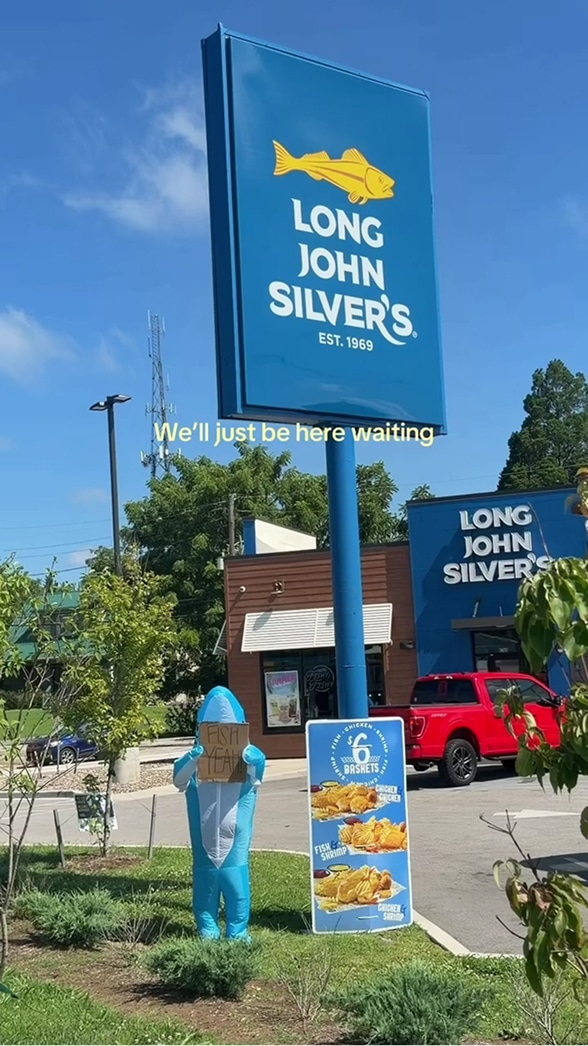
During Shark Week, we created a series of timely, culturally relevant videos for Long John Silver’s that gained serious traction. One video alone generated 4.3 million impressions on Instagram in its first week.

The Leap Group POV: Relevance Over Reflex

Here’s how we think about it: 

1. Know Your Audience's Cultural Language

Not every trend matters to your audience. A Gen Z-focused brand should be on TikTok, watching what sounds and formats are gaining traction. A B2B brand might find more opportunity in LinkedIn conversations or Twitter threads.

Check the data, not your assumptions. Where does your audience actually spend time? What do they engage with? 

2. Move Fast, But Not Recklessly

Yes, timing matters. But speed without strategy is noise. Before you post, ask:

  • Does this align with our brand voice?
  • Are we adding value or just adding volume?
  • What’s the goal: awareness, engagement, or conversion?

3. Show Personality, Not Desperation

Research shows 40% of users feel brands that showcase personality through content are more relevant to them. Culture jacking works when it feels authentic, when it’s clear you understand the trend and have something genuine to contribute.

It doesn’t work when it feels like you’re trying too hard. That’s a good way to turn your audience off.

4. Connect to the Broader Ecosystem

A viral post is great. A viral post that drives meaningful business outcomes is better. Think about how culture jacking fits into your larger marketing strategy:

  • Can this trend fuel paid media?
  • Does it connect to a campaign or product launch?
  • How do you measure success beyond views?

The Bottom Line

Culture jacking isn’t going anywhere. The brands that win will be the ones who treat it as strategic relevance, not frantic participation.

Show up for your audience, not for the algorithm 

Move with intention, not panic

Add fun and value to the conversation, don’t just insert yourself

Measure what matters, not just vanity metrics

It’s about relevance. Show up for your audience in ways that feel authentic, timely, and purposeful.

But it’s also about fun! People like memes and trends because it makes them laugh or feel good. Bring that joy to your post, and your brand.

In the end, culture jacking isn’t about the trend. It’s about the connection.

Ready to talk through what strategic culture jacking looks like for your brand? Leap Group is here for you.